

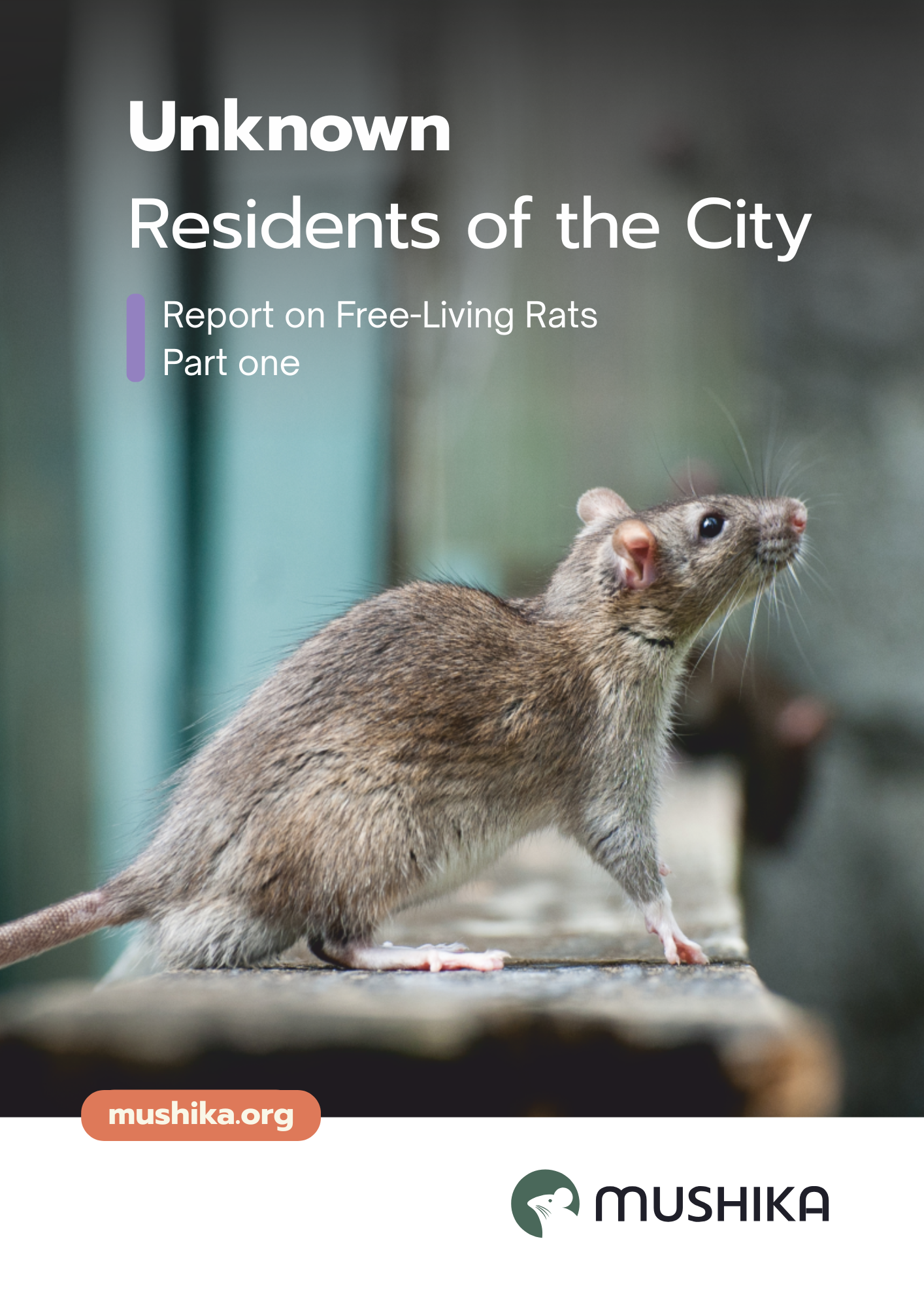
The Mushika Foundation has prepared a report Unknown Residents of the City. Report of Free-Living Rats. The first part is now available in English:
The report brings together three perspectives:
• Part one - Behavioural: How do rats live in the wild? How do colonies function, how do they communicate, and what roles do they play in urban ecosystems?
• Part two - Social: How do we perceive rats, and why do they evoke such strong emotions? How do stereotypes, language, and history shape our attitudes toward these animals?
• Part three - Legal: What is the legal status of free-living rats under Polish law? What are the legal frameworks for rat control, and what responsibilities lie with municipalities and private companies?
The report is an invitation to reflect. It shows that a rat is not humanity’s enemy, but its co-inhabitant. The goal is to shift the narrative — from fear to understanding, from extermination to managing coexistence.
The English-language versions of parts two and three will be published here soon.
Unknown Residents of the City. A Report on Free-Living Rats

Cooperation with the “W imię Zwierząt” Foundation on the Rat Conference
Mushika Foundation was co-organising and co-funding the conference “The Rat: Unwanted Guest or Master of Survival”, initiated by the “W imię Zwierząt” Foundation – a Kraków-based organisation working since 2024 to advance animal rights, ethical treatment, pro-animal education, and the promotion of plant-based diets.
Together, we created an event that, for the first time in Poland, put rats at the centre of a conversation about cities, empathy, and coexistence.
The conference took place on 13 December in Kraków.
Among the conference speakers was be Katarzyna Wypychewicz, President of Fundacja Mushika, and Dr. Edyta Wincewicz, veterinarian and lecturer at the Wrocław University of Environmental and Life Sciences. They presented our publication, “Unknown Residents of the City. Report on Free-Living Rats”. It is the first publication in Poland to take such a comprehensive look at free-living rats — their biology, behaviour, ecological role, legal status, and the ways in which culture and language shape their image.
Since 2019, the Ktoś Foundation has given hope to animals that have experienced neglect and harm. The organization runs Azyl Ktosiowo, a safe haven for horses, goats, and sheep. It also shelters dogs and cats in need – and more recently, raccoons and foxes. The foundation's goal is not only to rescue animals but also to educate society that animals are sentient beings deserving of care and respect.
Thanks to Mushika's support, the sanctuary has relocated to a site several times larger – to Musuły near Warsaw.
What has Ktosioowo gained from the move? The animals will enjoy a higher quality of life and will be easier to care for (better infrastructure). The sanctuary will be able to take in more residents, and the educational mission of the Ktoś Foundation will be easier to fulfill (excellent access from Warsaw).
Relocation of the Ktosiowo Animal Sanctuary
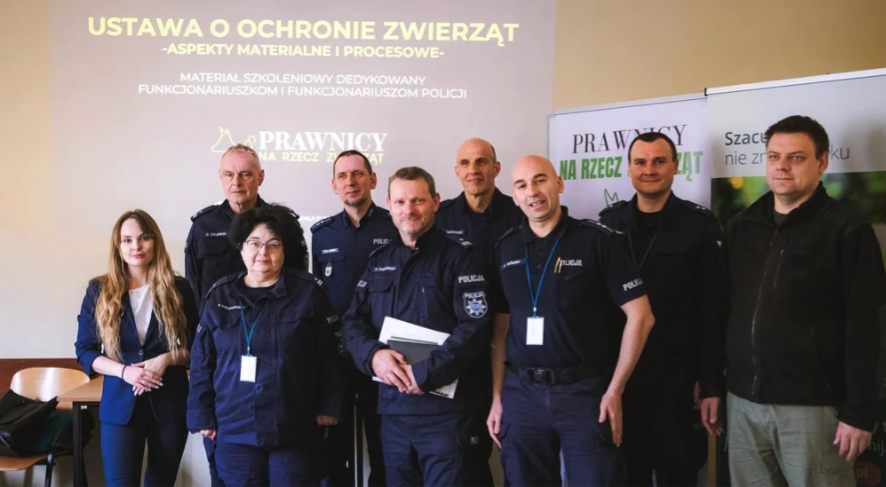
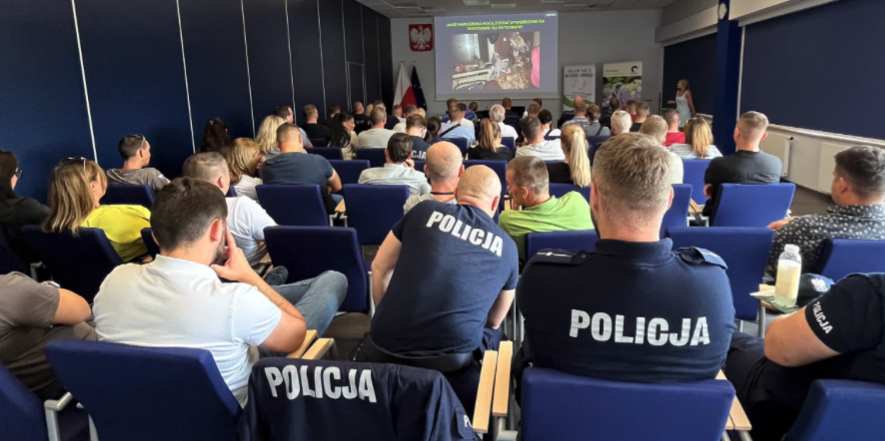
Together with the Association Lawyers for Animals (Prawnicy na Rzecz Zwierząt), we are implementing a nationwide training program for the Police. Sessions are held at all provincial headquarters, so that every police officer can gain practical knowledge on how to effectively respond to cases of violence against animals.
So far, we have trained more than 2,000 officers. Our sessions have already taken place at the Metropolitan Police Headquarters in Warsaw, as well as in the regional headquarters in Białystok, Łódź, Gorzów and at the Police Training Centre in Legionowo.
The training covers, among other topics:
✅ the role of the Police in systemic animal protection
✅ interventions in cases of abuse and neglect
✅ procedures concerning stray and injured animals
✅ administrative procedures for removing animals as a key protective tool
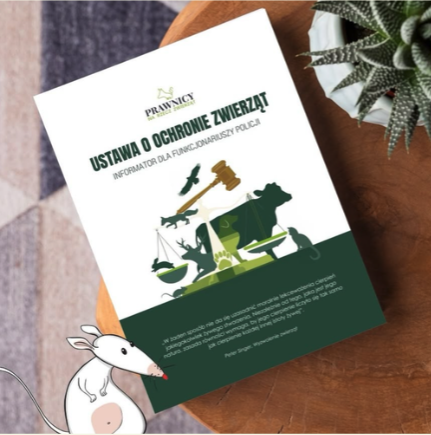
At the same time, the printed publication “The Animal Protection Act – A Guide for the Police”, prepared together with the lawyers, has been distributed to all police schools in Poland. It is a practical guide that supports officers in their daily work.
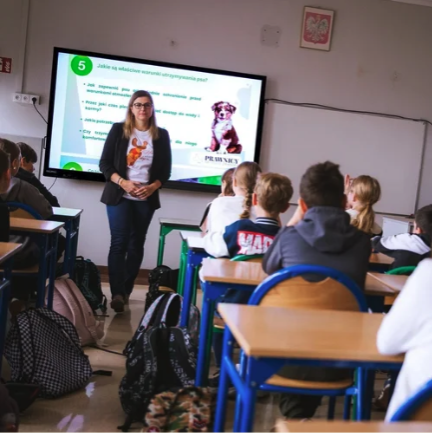
We share knowledge about animal protection not only with the Police. We have also conducted training for public administration staff and held workshops for primary and secondary school students as part of Education Day.
Thanks to these efforts, we are strengthening systemic animal protection – with more empathy, knowledge, and effectiveness in enforcing the law.
Cooperation with the Association Lawyers for Animals

Sanctuary for Rescued Nutrias – Cooperation with the Łapa i Las Foundation
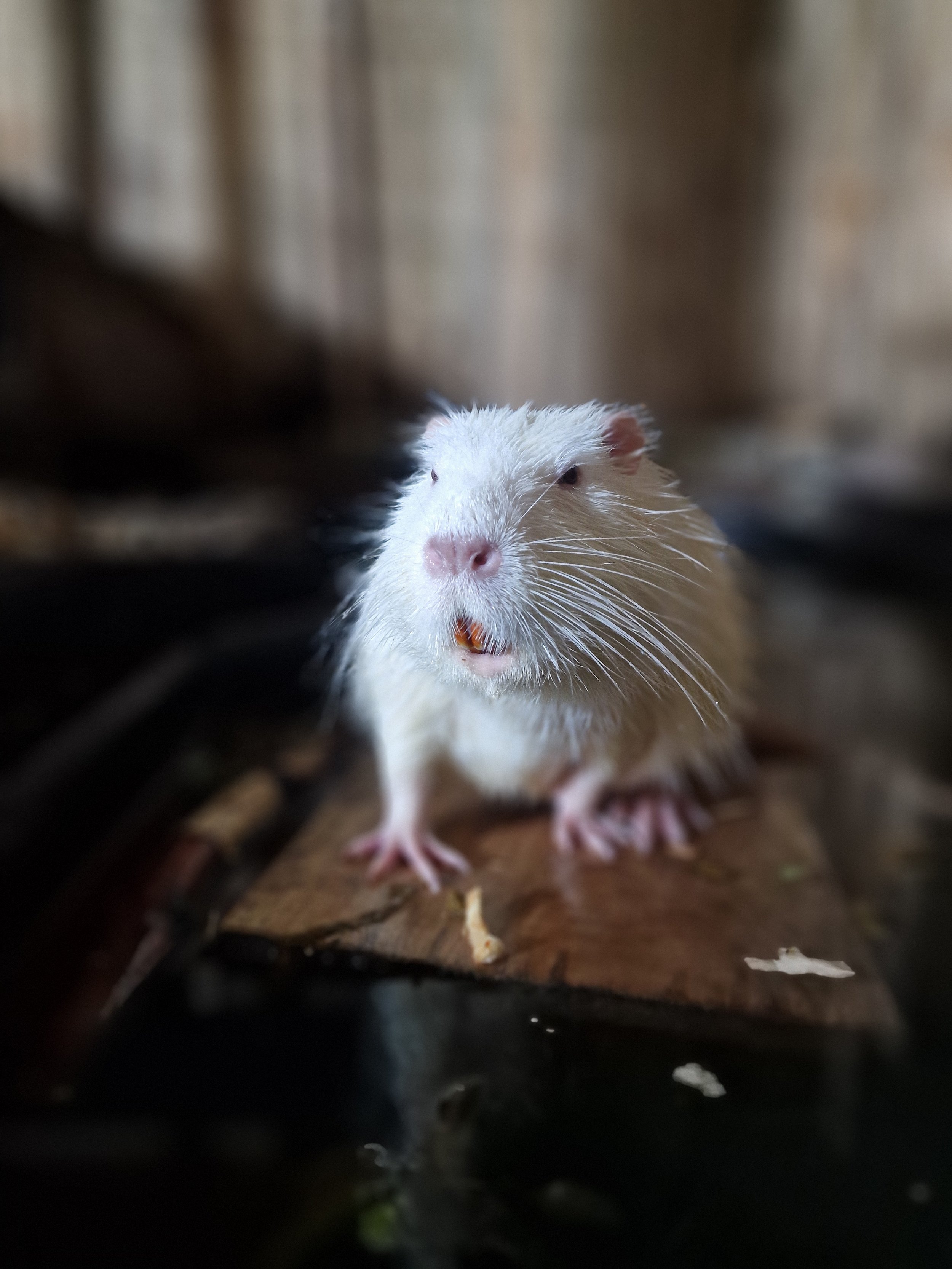
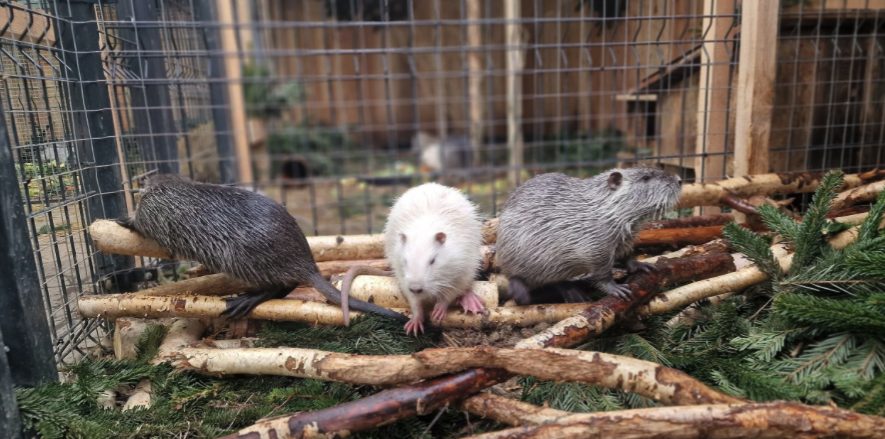
Fundacja Mushika supports Nutriowisko – a sanctuary created for nutrias trapped in urban areas and run by the Łapa i Las Foundation. It is a safe, isolated environment where these remarkable animals can live peacefully, in conditions that respect their needs and natural behaviours.
Operating the sanctuary makes it possible to gradually and humanely reduce the population of nutrias, classified as an invasive alien species (IAS). Instead of rapid and often brutal elimination methods – such as shooting or chemical euthanasia – the centre relies on live trapping. The captured animals are transferred to Nutriowisko, where their welfare is the priority. This approach enables actions grounded in respect for the lives and needs of these animals.
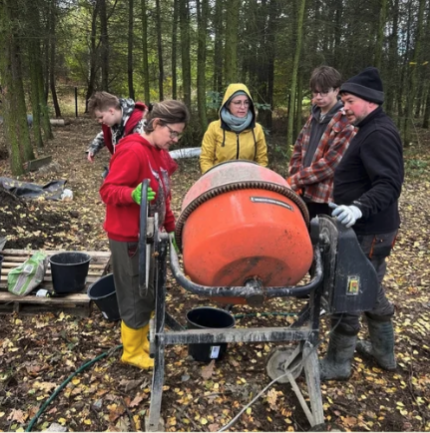
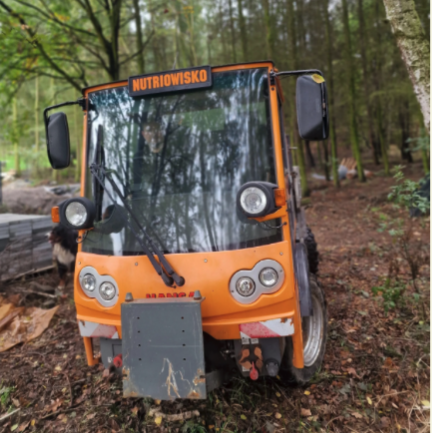
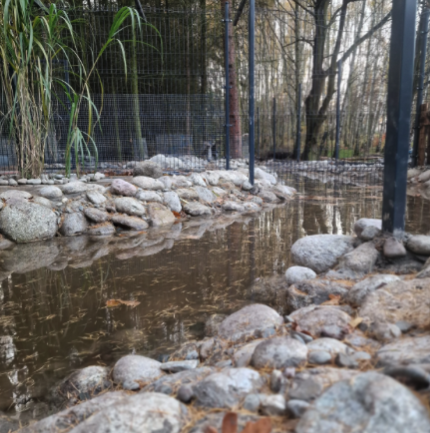
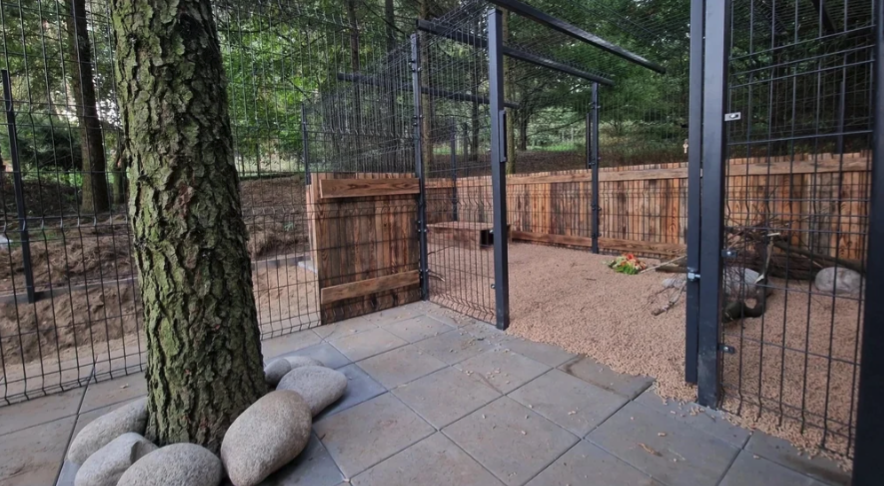
In cooperation with the Łapa i Las Foundation and the City of Rybnik, Fundacja Mushika is financing the expansion of Nutriowisko’s infrastructure so that it can accommodate even more animals. Grant funds have been allocated to the purchase of construction materials, a utility vehicle for field operations, the creation of additional animal areas including outfitting nutria enclosures, installation of monitoring systems, and the construction of a small biological wastewater treatment unit. The project also includes building a storage facility with a veterinary station to better support the sanctuary’s residents. Mushika has additionally funded mandatory sterilisation and microchipping of the nutrias.
Thanks to these joint efforts, Nutriowisko is becoming a model of empathetic and responsible human care for invasive species – a place where compassion, knowledge, and social responsibility translate into real change.
The City of Rybnik is actively involved in the project, offering substantive and organisational support – including the coordination of volunteer efforts during the sanctuary’s construction. As a result, Nutriowisko is not only a civil society initiative but also part of the city’s public policy.
Launch of Animal Helper reporting services in the Świętokrzyskie Voivodeship
With great joy, we announce that thanks to the support of the Mushika Foundation, Animal Helper officially launched its operations in the Świętokrzyskie Voivodeship on March 26, 2025.
Animal Helper is the “112 for animals” — an app that enables quick reporting of situations where an animal’s health or life is at risk. It responds to cases such as abuse, neglect, road accidents, and other emergencies involving pets, wild animals, and farm animals. Reports can be submitted 24/7.
Animal Helper is already operating in nine voivodeships: Pomeranian, West Pomeranian, Greater Poland, Łódź, Silesian, Lubusz, Opole, Kuyavian-Pomeranian, and Masovian. Now it's time for Świętokrzyskie!

Support for the statutory activities of the Open Cages
The Open Cages Association is a nationwide organisation that has been active in Poland since 2012, fighting to improve the fate of farm animals.
The mission of the organisation is to prevent animal suffering by introducing systemic social changes, documenting conditions of industrial farming, and promoting education that fosters positive attitudes towards animals.
Open Cages run campaigns aimed at improving the fate of farm animals, including initiatives like "How Do They Bear It?", "Frankenchicken", and the "Stop Industrial Farms Social Coalition". The organisation also fights for a ban on fur farming in Poland with the "Time for a Ban!" campaign and promotes reducing the consumption of animal products in the "Plant-Based Eating" campaign.
Activities of Open Cages include:
Lobbying for legal changes to improve the situation of animals
Publishing videos and photos from Polish farms
Inspections and interventions on farms, including rescuing animals
Conducting legal proceedings related to animal cruelty
Issuing reports, brochures, and leaflets about industrial animal farming
Organising information booths and social campaigns
Promoting plant-based diets and supporting companies in introducing plant-based products and dishes
Organising the international CARE conference in Warsaw for members of the pro-animal movement
Since 2018, Open Cages has been a co-founder of Anima International, operating in Poland, the UK, Denmark, France, Bulgaria, and Norway.
The Mushika Foundation has supported Open Cages with a donation of PLN 100,000 for statutory purposes, enabling the development of activities. Thanks to this support, Open Cages can more effectively fulfil their mission both domestically and internationally.
Campaign aimed at banning the use of cages for calves – Bulgarian foundation Nevidimi Zhivotni ('Invisible Animals')
Nevidimi Zhivotni ('Invisible Animals') is a Bulgarian animal protection organisation established in 2021. Its mission is to fight for a world where no animal suffers needlessly. The organisation strives to achieve lasting and systemic changes in the treatment of animals and societal attitudes towards them.
Currently, the organisation is solely focused on a campaign aimed at banning the use of cages for calves. This campaign was initiated with support from the Mushika Foundation.
In many cattle farms, calves are separated from their mothers from birth and confined in narrow cages, barely larger than their own bodies. A confined calf spends the first months of its life in isolation and loneliness, without contact with other animals, and without space to play or run. The Cage-Free campaign seeks to introduce systemic changes that will end this cruel practice and ensure better living conditions for the calves.
Thanks to a project grant from the Mushika Foundation, the organisation has:
In less than a year, gathered 82,000 signatures for the campaign's petition, demonstrating the support of Bulgarian citizens for this initiative
Gained the backing of over 20 MPs representing five of the eight parties in the Bulgarian parliament, increasing the chances of real changes in law
Made the ban on calf cages a topic of national debate, frequently appearing in public media
Raised public awareness about the suffering of calves
With support from the Mushika Foundation, which donated €15,000, Nevidimi Zhivotni can continue its advocacy and educational efforts, bringing Bulgaria closer to the day when calf cages will be banned. Success in this country could accelerate changes across the entire European Union.
Like Open Cages, Nevidimi Zhivotni is part of Anima International, which operates in Poland, Bulgaria, the United Kingdom, France, Denmark, and Norway.